This infused oil was made with the goal of being both anti-inflammatory and anti-anxiety.
Applying the infused oil topically can help ease stress, anxiety, physical pains, and more.
Valerian root
Features
Scientific name: Valeriana officinalis
Appearance: Brown, fibrous root with a strong, earthy smell
Smell: Musky, sometimes described as earthy
Properties
Sedative and relaxing: Calms the nervous system and promotes sleep
Anxiolytic (anti-anxiety): Helps reduce stress and tension
Muscle relaxant: Soothes cramps, muscle spasms, and tension headaches
Mild pain reliever: May help with headaches and menstrual cramps
Digestive aid: Supports digestion, especially for nervous stomach issues
Use cases for Valerian root
- Supports better sleep by reducing insomnia and improving sleep quality.
- Calms the nervous system, helping to relieve stress and anxiety.
- Eases menstrual cramps and alleviates PMS or PMDD symptoms.
- Aids digestion by soothing bloating and a nervous stomach.
- Helps reduce tension headaches and related discomfort.
Lavendin
Features
Scientific name: Lavandula x intermedia
Appearance: Similar to lavender, with tall stems and purple flowers
Taste: Slightly bitter, floral, and camphor-like
Smell: Stronger and more camphorous than true lavender
Properties
Calming and relaxing: Helps reduce stress and anxiety
Antiseptic and antibacterial: Supports wound healing and skin health
Anti-inflammatory: Soothes irritated skin and sore muscles
Respiratory support: Helps clear congestion and ease breathing
Use cases for Lavendin
- Helps promote relaxation and mental clarity in aromatherapy
- Calms the nervous system and reduces stress and anxiety
- Provides muscle pain relief when used in massage oils and salves
- Helps with breathing and congestion when used in steam inhalation
Details on making this infused oil
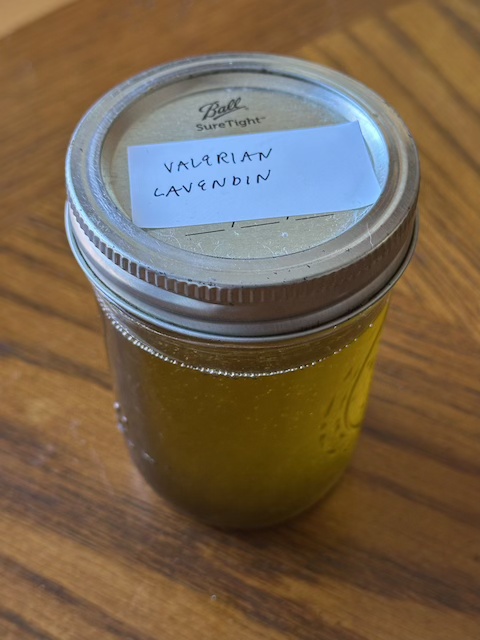
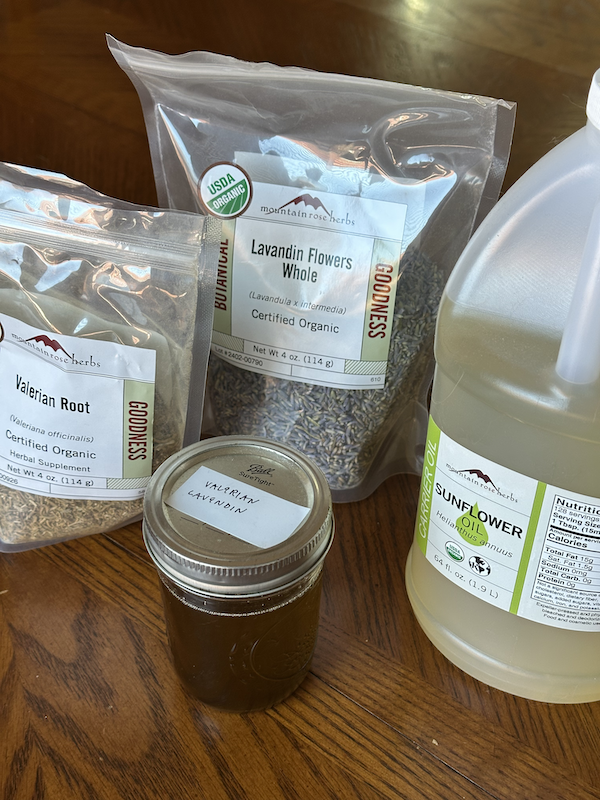
This infused oil uses:
- Sunflower oil
- Dried valerian root
- Dried lavendin
Originally, I learn how to make infused oil thanks to First Curve Apothocary’s courses through Greenspell (Alex is so great, highly reccommend taking a class!)
In the class we learned about basic herb properties and how to combine them to get any combination of desired outcomes.
Having used Valerian in tea before to help with chronic pain, I knew that this is where I wanted to start. I added Lavendin to this oil to help aid in promoting mental clarity, ease etc. It works pretty well! I’ve also lent it to a friend to use.
What’s the difference between Lavender and Lavendin?
Lavender (Lavandula angustifolia) is a gentle, sweet-smelling herb known for its calming and relaxing effects, making it ideal for sleep, anxiety relief, and skincare.
Lavandin (Lavandula x intermedia), a hybrid of lavender and spike lavender, has a stronger, more camphorous scent with higher camphor content, making it better for muscle pain relief, respiratory support, and insect repellent. Lavender is softer and more sedative, while lavandin is more stimulating and medicinal.
Where do I buy herbs?
As a recommendation from Alex at Greenspell, I bought herbs and sunflower oil from these places:
- https://mountainroseherbs.com/
- https://mountainroseherbs.com/catalog/ingredients
- https://www.goldenhourherbs.com/
Online resource the learn more about making infused oils at home, safely
 Julia Nordhem